

Clique em uma foto para ir ao Google Livros
|
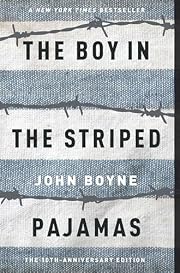
Carregando... The Boy in the Striped Pajamas (2006)de John Boyne
  
Historical Fiction (43) » 33 mais Top Five Books of 2013 (510) Books Read in 2017 (403) Best War Stories (25) Top Five Books of 2023 (481) Reading Globally (21) Holocaust (47) Books Read in 2010 (97) Books Read in 2012 (43) Books Read in 2011 (16) Best Friendship Stories (158) deBib 2023 (15) BBC World Book Club (47) READ in 2023 (109) Books set in Berlin (45) PRC 2015 Years 7&8 (27) Historical Fiction (81) Biggest Disappointments (410) Ainda não há conversas na Discussão sobre este livro.   ) ) LyndaWolters1 | Apr 3, 2024 | LyndaWolters1 | Apr 3, 2024 |  I reread The Boy in the Striped Pyjamas before starting All the Broken Places and it had an even greater impact on me second time round. The stark contrast between Auschwitz seen through the eyes of a naïve, 9-year-old forced to leave the luxury of his 5-storey home in Berlin when his father is promoted to the rank of camp commandant and the vivid images stamped on my mind from newsreels showing the liberation of the camps and the horrors of the atrocities committed there, from documentaries about the holocaust and the final solution and from interviews with survivors made this book a chilling and compelling read. When Bruno innocently ponders why the hordes of passengers being forced to board an already packed train on the opposite platform can’t just cross over and join him on his empty train going in the same direction, I pictured the grim reality with a sick feeling in my stomach. The characters are all really well drawn: the repetition of phrases, mispronunciation of key words and gripes over the lack of playmates, lessons and The Hopeless Case perfectly portray Bruno as a self-preoccupied and privileged young boy while the depiction of his new friend Schmuel on the other side of the fence is simply heart-breaking. The coldness and cruelty emanating from Lieutenant Kurt Kotler send shivers down the spine while Mother’s medicinal sherry and Father’s iron fist create a real impression of home life. For a relatively short book The Boy in the Striped Pyjamas packs a powerful punch and poses many questions for adult and younger readers alike. A harrowing and haunting work of fiction, a tense and atmospheric read and a unique perspective on this unforgettable period in history. “You wear the right outfit and you feel like the person you’re pretending to be.” ( ) geraldine_croft | Mar 21, 2024 | 1  AnkaraLibrary | Feb 29, 2024 | AnkaraLibrary | Feb 29, 2024 | If you are looking for a moving story told through the eyes of a child, you might enjoy this book. If you are looking for a factual holocaust story, then read an account from a reputable historian or someone who was there. (  ) amurray914 | Feb 27, 2024 | ) amurray914 | Feb 27, 2024 |  ) bschweiger | Feb 4, 2024 | ) bschweiger | Feb 4, 2024 |
"Powerful and unsettling.......As memorable an introduction to the subject as The Diary of Anne Frank." "Deeply affecting......Beautiful and sparely written" Aunque el uso habitual de un texto como éste es describir las características de la obra, por una vez nos tomaremos la libertad de hacer una excepción a la norma establecida. No sólo porque el libro que tienes en tus manos es muy difícil de definir, sino porque estamos convencidos de que explicar su contenido estropearía la experiencia de la lectura. Creemos que es importante empezar esta novela sin saber de qué trata. No obstante, si decides embarcarte en la aventura, debes saber que acompañarás a Bruno, un niño de nueve años, cuando se muda con su familia a una casa junto a una cerca. Cercas como ésa existen en muchos sitios del mundo, sólo deseamos que no te encuentres nunca con una. Por último, cabe aclarar que este libro no es sólo para adultos; también lo pueden leer, y sería recomendable que lo hicieran, niños a partir de los trece años de edad. Escolhi ler este livro porque consegue abordar a época Nazi de uma forma simples, não deixando, no entanto, de ser cruel e realista. Foca a inocência de duas crianças, que apesar de pertencerem a culturas diferentes, conseguem viver uma amizade inocente num mundo ignorante. Recomendo-o pois ele consegue transmitir que somos todos seres humanos e que devemos ser respeitados independentemente dos nossos ideias, costumes e cultura, porque se não o fizermos podemos magoar quem realmente amamos. Tem a adaptaçãoGuia para Professores e EnsinoPrêmiosDistinctionsNotable Lists
Bored and lonely after his family moves from Berlin to a place called "Out-With" in 1942, Bruno, the son of a Nazi officer, befriends a boy in striped pajamas who lives behind a wire fence. Não foram encontradas descrições de bibliotecas. |
Current DiscussionsNenhum(a)Capas populares
 Google Books — Carregando... Google Books — Carregando...GênerosClassificação decimal de Dewey (CDD)823.92Literature English & Old English literatures English fiction Modern Period 2000-Classificação da Biblioteca do Congresso dos E.U.A. (LCC)AvaliaçãoMédia: (3.96)
É você?Torne-se um autor do LibraryThing. |
||||||||||||||||||||||||||||||||||||||||||||||||||||||||||||||||||||||||||||||||||||||||||||||||||||||||||||||||||||||||||



 14
14